1 / 1

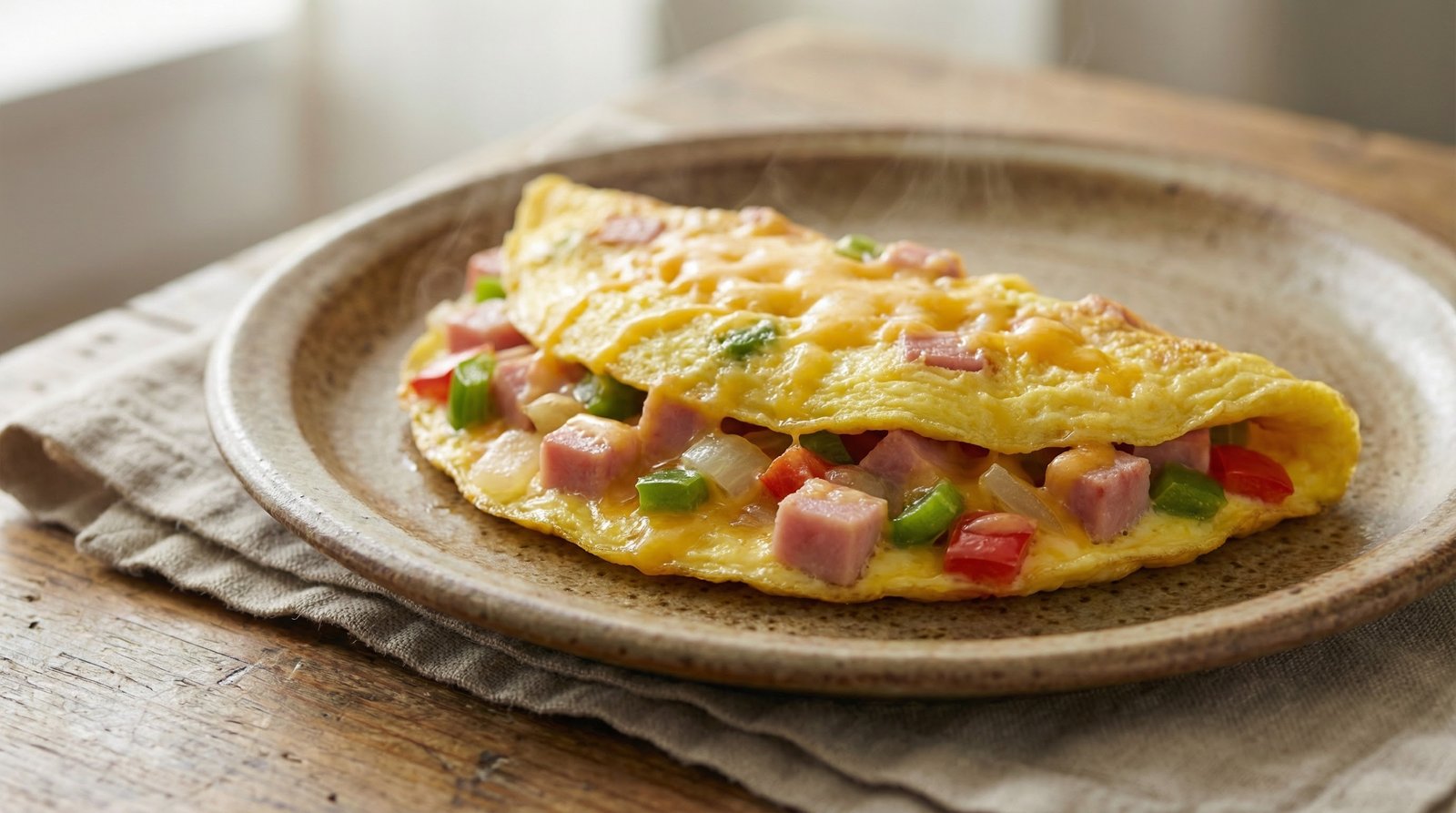
Denver Omelet Recipe
A diner staple you can easily recreate at home, this hearty omelet is packed with savory diced ham, sweet bell peppers, and tender onions. You'll cook the vegetable filling first until lightly caramelized, then fold it into fluffy, golden eggs. It's a satisfying, protein-rich breakfast that feels like a weekend treat but is entirely manageable on a weekday morning.
Equipment
- Skillet
- Stovetop
Ingredients
- 1 tablespoon olive oil
- 1 small onion, chopped
- 1 green pepper, chopped
- 1 red pepper, chopped
- 1 piece cooked ham (4 ounces), finely chopped (1 cup)
- 8 large eggs
- ½ cup water
- ½ teaspoon salt
- 4 teaspoons butter or margarine
Instructions
- 1Heat the olive oil in a 10-inch nonstick skillet over medium heat. Add the chopped onion, green pepper, and red pepper. Cook and stir occasionally for about 10 minutes until the vegetables soften, which builds a sweeter flavor base. Stir in the chopped ham and cook until warmed through.
- 2Whisk the eggs, water, and salt together in a medium bowl until well combined. The water creates steam as the eggs cook, making the omelet lighter and fluffier.
- 3Melt 1 teaspoon of butter in a separate 10-inch nonstick skillet over medium-high heat. Pour 1/2 cup of the beaten egg mixture into the hot pan.
- 4Cook the eggs for about 1 minute. Use a heat-safe rubber spatula to gently lift the edges, tilting the pan so the uncooked egg runs underneath and sets.
- 5Spoon one-fourth of the ham and pepper filling onto one half of the cooked eggs. Fold the empty half over the filling and carefully slide the finished omelet onto a warm plate. Repeat this process with the remaining butter, eggs, and filling.
Notes
- Keep warm: Transfer finished omelets to a 200°F oven to keep them hot while you prepare the remaining batches.
- Storage: Store leftover filling in an airtight container in the fridge for up to 3 days. It's best to cook the eggs fresh when you're ready to eat.
- Swap: You can substitute milk for the water if you prefer a richer egg texture, though water yields a slightly fluffier result.