1 / 1
Swipe left / right
More recipes
Scroll down
Full recipe
Tap
Toggle menu
Tap anywhere to continue
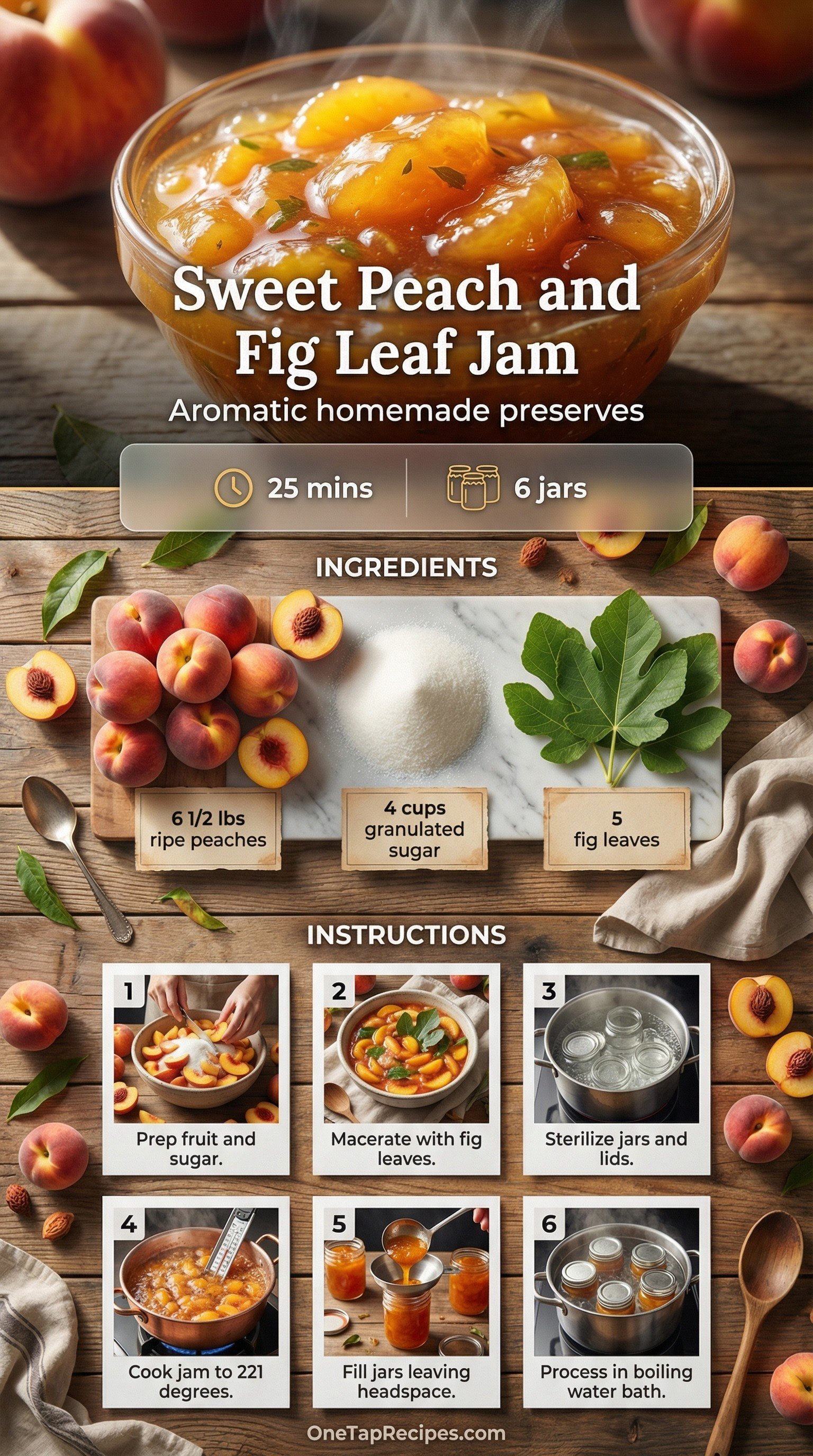
Sweet Peach and Fig Leaf Jam
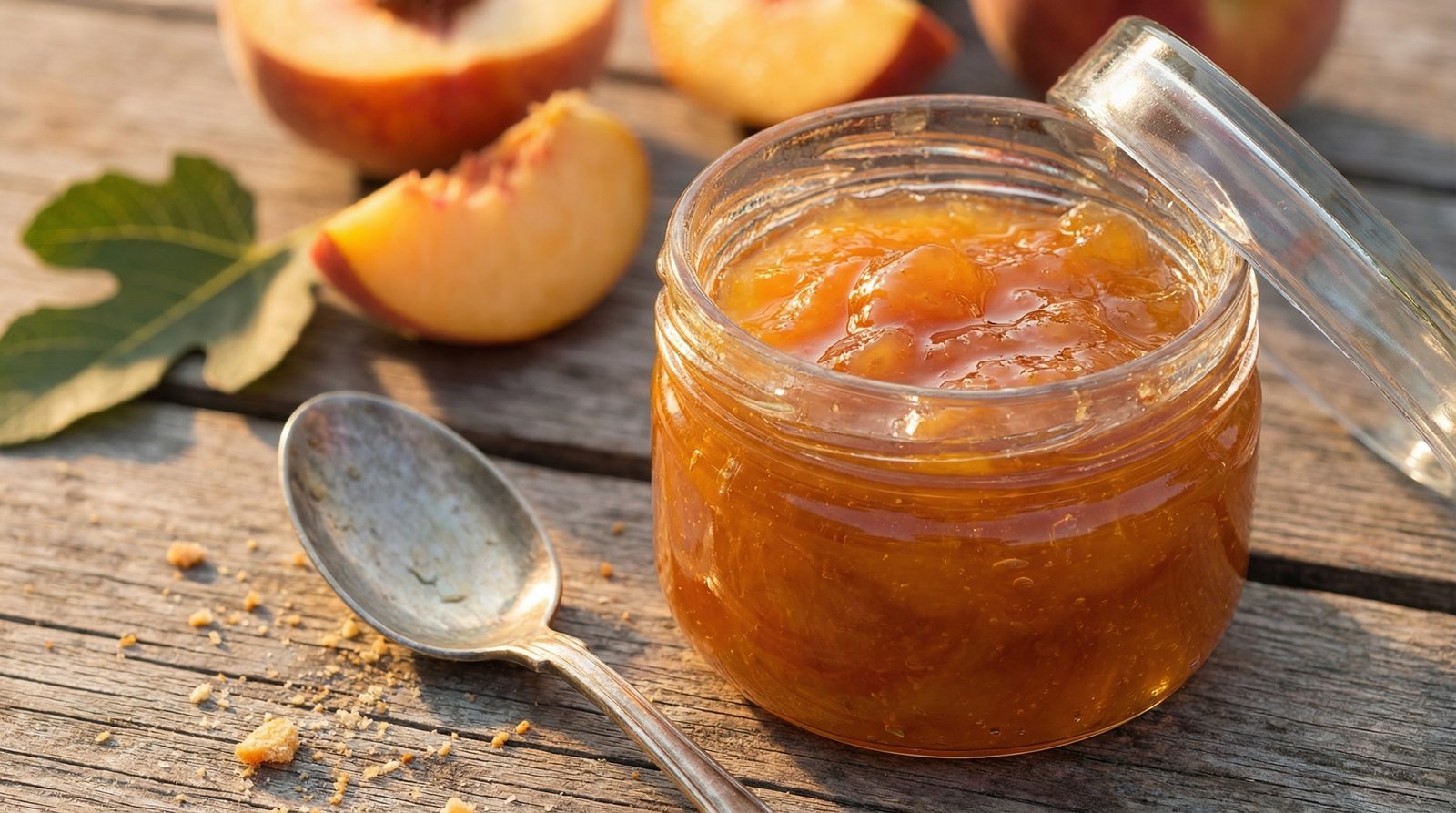
Sweet summer peaches combine with fragrant fig leaves to create a uniquely aromatic homemade preserve. The fig leaves infuse the fruit with subtle notes of coconut and vanilla as the mixture simmers down into a thick, glossy spread. This canning project is perfect for preserving the peak of stone fruit season to enjoy during colder months. Spread it generously over toasted sourdough or swirl it into morning yogurt.
Ingredients
- 6½ pounds (3 kg) ripe peaches
- 4 cups (800 g) granulated sugar
- 5 fig leaves (each about the size of your palm)
Instructions
- 1Squeeze the juice from two lemons and set it aside.
- 2Quarter the peaches, discard the pits, and weigh the fruit to ensure you have about five and a half pounds.
- 3Chop the quartered peaches into one-inch pieces, transfer them to a wide heavy-bottomed pot, and stir in the sugar.
- 4Add the fig leaves to the pot with the sugared peaches.
- 5Cover the pot and let the mixture stand for at least thirty minutes or up to overnight, refrigerating if holding for the longer duration.
- 6Wash six eight-ounce glass jars and their corresponding lids in hot soapy water.
- 7Select a large pot that can hold all the jars without them touching, ensuring it is tall enough to allow at least two inches of water above the jar tops.
- 8Fill the large pot with water and bring it to a boil, then carefully lower the glass jars and metal rings into the water to sterilize them while preparing the jam.
- 9Place the flat top pieces of the lids into a separate heatproof bowl.
- 10Cook the peach mixture over high heat for about twenty-five minutes, stirring frequently and scraping the bottom of the pot until the fruit is tender enough to pierce easily with a fork.
- 11Continue cooking and stirring until the jam reaches 221 degrees Fahrenheit on an instant-read thermometer, then turn off the heat, remove the fig leaves, and stir in the lemon juice and a pinch of salt.
- 12Use tongs to lift the empty jars out of the boiling water, keeping the water at a boil, and set them on a clean towel-lined baking sheet.
- 13Transfer the metal rings into the bowl containing the flat lids and ladle some of the boiling water over them.
- 14Ladle the hot jam carefully into the sterilized jars, leaving a quarter inch of empty headspace at the top of each one.
- 15Wipe the jar rims with a clean damp towel, apply the flat tops, and screw on the metal rings until fingertip tight.
- 16Lower the filled and sealed jars back into the boiling water bath and process them for ten minutes.
- 17Remove the processed jars from the water bath, return them to the towel-lined baking sheet, and leave them undisturbed for twelve hours.
- 18Check the lids after twelve hours to confirm they have sealed properly, looking for a concave dimple in the center of each flat top.
- 19Transfer any unsealed jars to the refrigerator for immediate use, and transfer the properly sealed jars to a pantry for long-term storage.
- 20Place any opened jars into the refrigerator to maintain freshness.