1 / 1
Fermented Caraway Cabbage
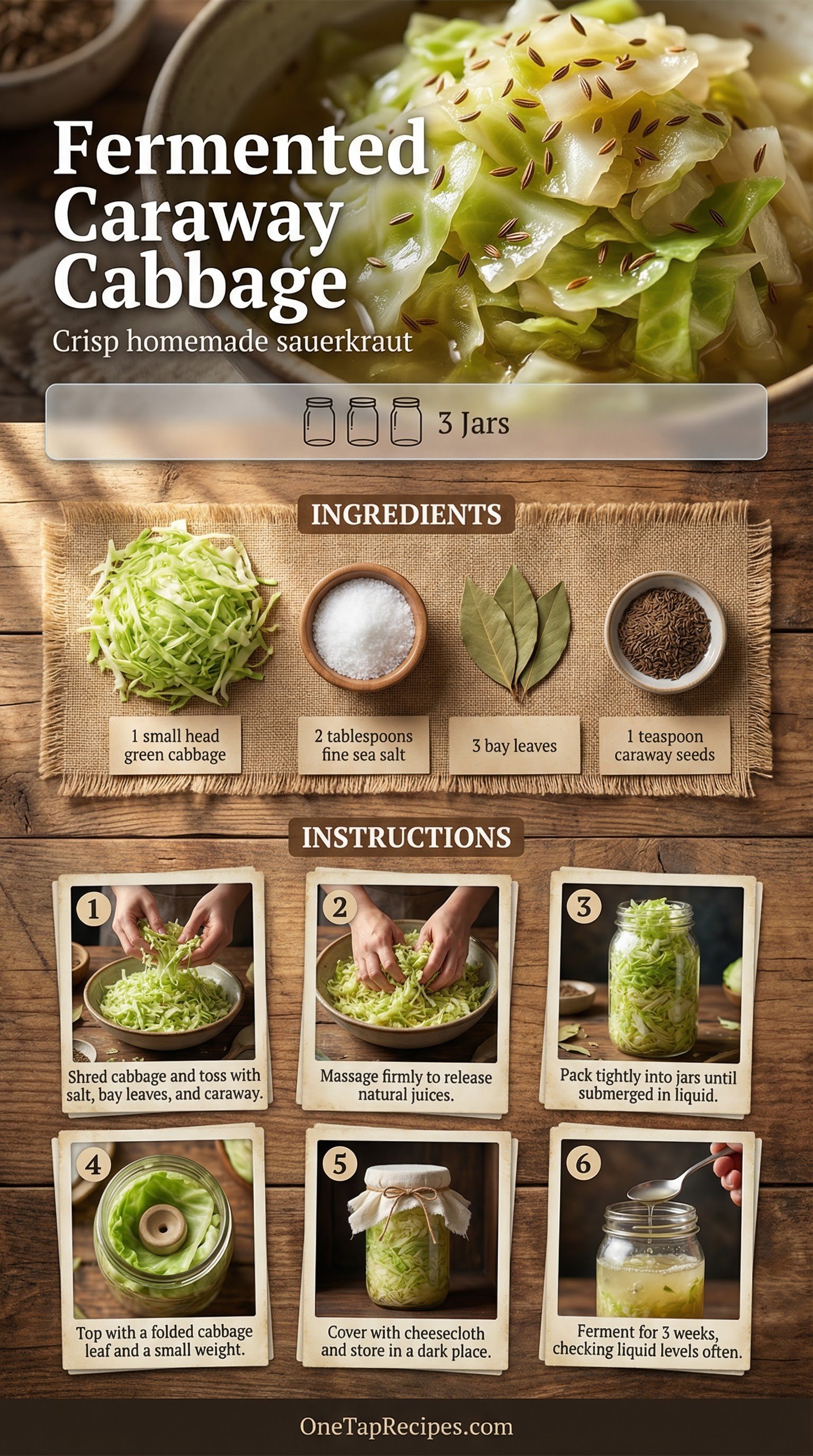
The secret to this classic fermented cabbage is a simple salt massage that draws out natural juices to create a crisp, tangy brine. Earthy bay leaves and caraway seeds give the mix a deep, savory flavor profile. It takes a few weeks of patience, but you'll be rewarded with a bright, crunchy condiment that upgrades any meal. Pile it high on sandwiches, serve it alongside roasted meats, or mix it into grain bowls for a sharp, acidic bite.
Ingredients
- 1 small head green cabbage (about 3 pounds / 1.4 kg)
- 2 tablespoons fine sea salt
- 3 bay leaves
- 1 teaspoon caraway seeds
Instructions
- 1Peel off 3 outer leaves from the cabbage and set them aside.
- 2Trim and core the remaining cabbage, then slice it into thin shreds. Transfer the shredded cabbage to a large bowl, sprinkle 2 tablespoons of fine sea salt over the top, and toss in the bay leaves and caraway seeds.
- 3Massage the cabbage firmly with your hands for several minutes, squeezing the shreds to draw out their natural liquid. This step creates the brine needed for safe fermentation.
- 4Divide the cabbage mixture evenly among 3 clean 16-ounce (480 ml) jars. Press the cabbage down firmly until the natural liquid rises above the solid pieces to completely cover them.
- 5If there isn't enough natural liquid, mix 1 heaping teaspoon of salt into 1 cup of water to create extra brine. Pour this mixture into the jars until the cabbage is fully submerged.
- 6Fold one of the reserved outer cabbage leaves and tuck it into the top of each jar. Place a small, clean weight like a glass lid on top of the folded leaf to keep everything pushed under the brine. Oxygen exposure causes mold, so keeping the cabbage submerged prevents spoilage.
- 7Drape a piece of cheesecloth over the mouth of each jar and secure it tightly with a rubber band or twine. Store the jars in a cool, dark spot for about 3 weeks.
- 8Inspect the jars after the first 24 hours to confirm the cabbage remains under the liquid. Continue checking every couple of days, adding more mixed saltwater brine if the liquid level drops.
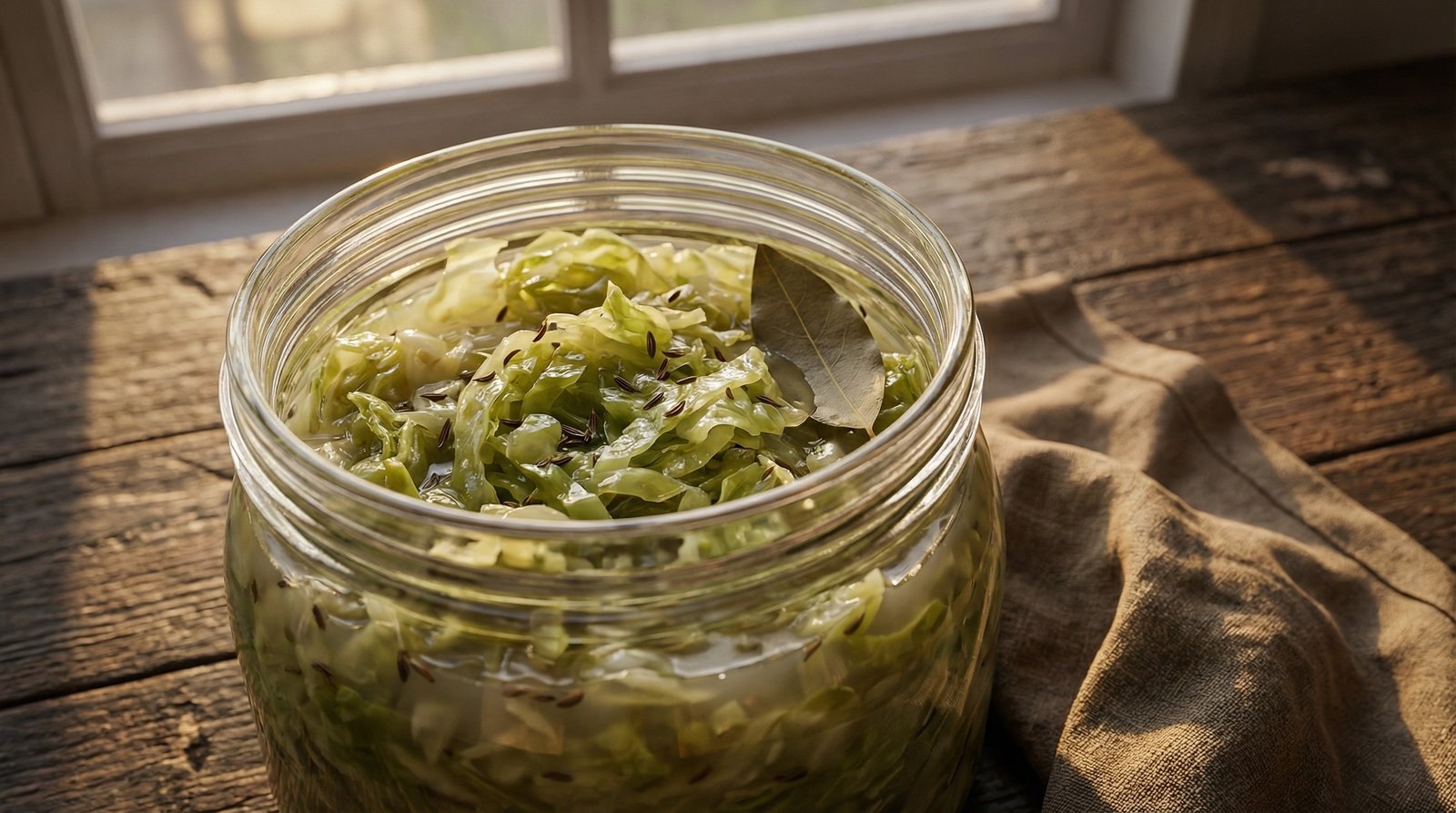
- 9Watch for small bubbles forming in the jars as the fermentation becomes active. Taste the cabbage periodically until it reaches your preferred level of sourness.
Notes
- Storage: Transfer the jars to the refrigerator once the flavor reaches your preferred level of sourness. The cold temperature slows down the fermentation and preserves the crunch.
- Equipment: You can use tiny plates, specialized fermentation weights, or clean glass Weck jar lids to weigh down the cabbage.
- Safety: Always ensure the cabbage stays completely submerged in the brine to prevent mold growth during the fermentation process.