1 / 1
Chewy One-Bowl Oatmeal Cookies
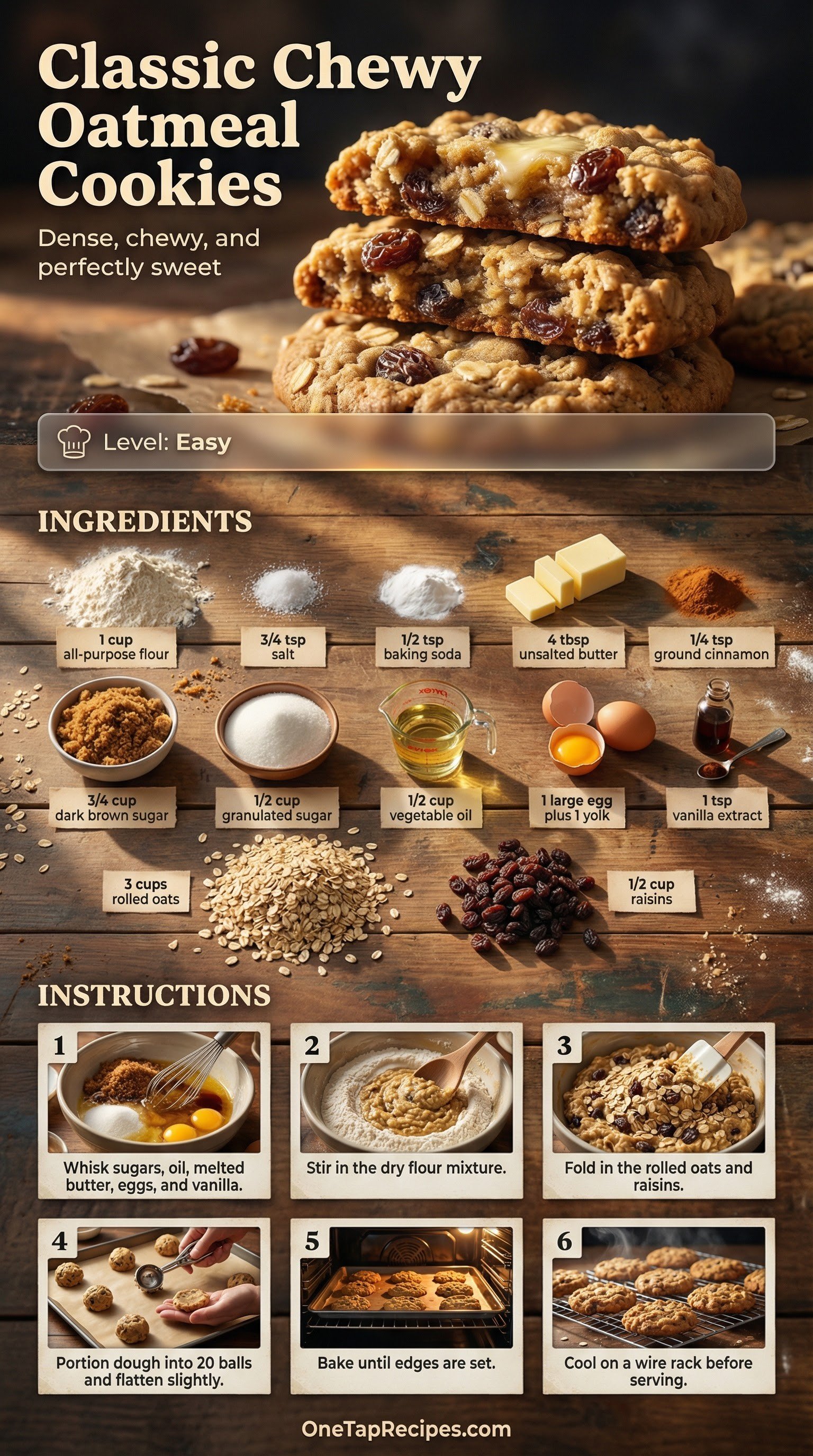
The secret to these incredibly chewy cookies is swapping some of the traditional butter for vegetable oil. It keeps the dough rich and dense instead of cakey, while dark brown sugar and a hint of cinnamon build a deep, comforting flavor. You won't even need to drag out the stand mixer, because everything mixes easily by hand in a single bowl. They're exactly what you want when a sudden sweet craving hits.
Equipment
- Oven
- Baking sheet
Ingredients
- 1 cup (5 ounces) all-purpose flour
- ¾ teaspoon salt
- ½ teaspoon baking soda
- 4 tablespoons unsalted butter
- ¼ teaspoon ground cinnamon
- ¾ cup packed (5¼ ounces) dark brown sugar
- ½ cup (3½ ounces) granulated sugar
- ½ cup vegetable oil
- 1 large egg plus 1 large yolk
- 1 teaspoon vanilla extract
- 3 cups (9 ounces) old-fashioned rolled oats
- ½ cup raisins (optional)
Instructions
- 1Whisk the dark brown sugar, granulated sugar, and vegetable oil into the melted butter in a large bowl until well blended. Whisk in the whole egg, egg yolk, and vanilla extract until the mixture is completely smooth.
- 2Stir the flour, salt, baking soda, and cinnamon into the wet ingredients using a wooden spoon or spatula. Mix for about one minute until no dry streaks remain.
- 3Fold in the rolled oats and optional raisins until they're evenly distributed throughout the stiff dough.
- 4Portion the dough into 20 equal pieces, using about 3 tablespoons per cookie. Place 10 dough balls on each prepared baking sheet, spacing them 2 inches apart. Dampen your hands and flatten each ball into a disk about 2.5 inches wide.
- 5Bake one sheet at a time for 8 to 10 minutes, rotating the pan halfway through. The cookies are done when the edges are set and lightly browned, while the centers remain soft but not wet.
- 6Let the baked cookies rest on the baking sheet for 5 minutes. The residual heat helps them set up without overbaking. Use a wide metal spatula to transfer them to a wire rack to cool completely.
Notes
- Flavor boost: Brown the butter before mixing it with the sugars and oil for a deeper, nuttier flavor.
- Texture tip: Mixing by hand instead of using a stand mixer prevents incorporating too much air, keeping the cookies dense and chewy.
- Storage: Keep the cooled cookies in an airtight container at room temperature for up to 5 days.