1 / 1
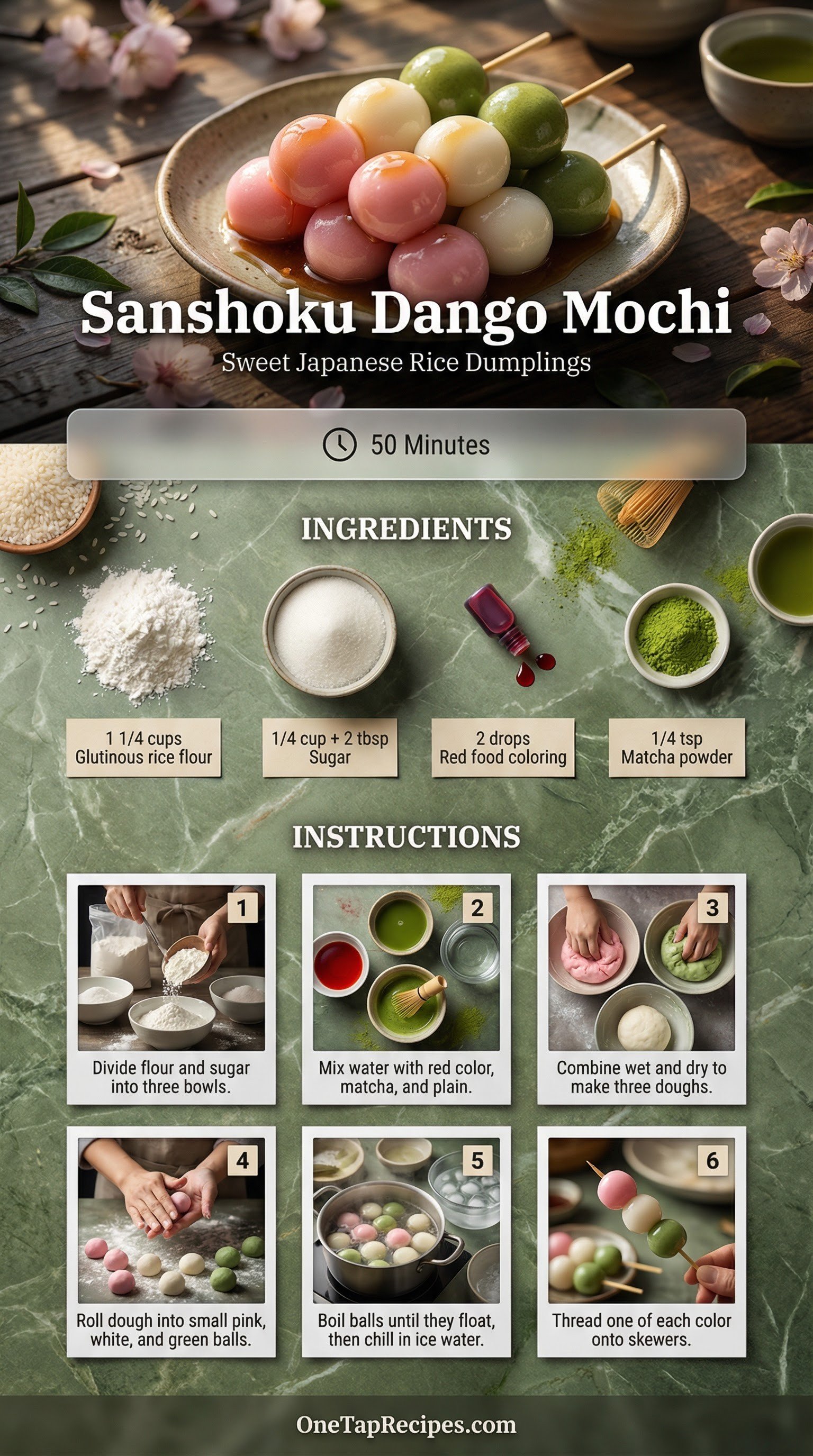
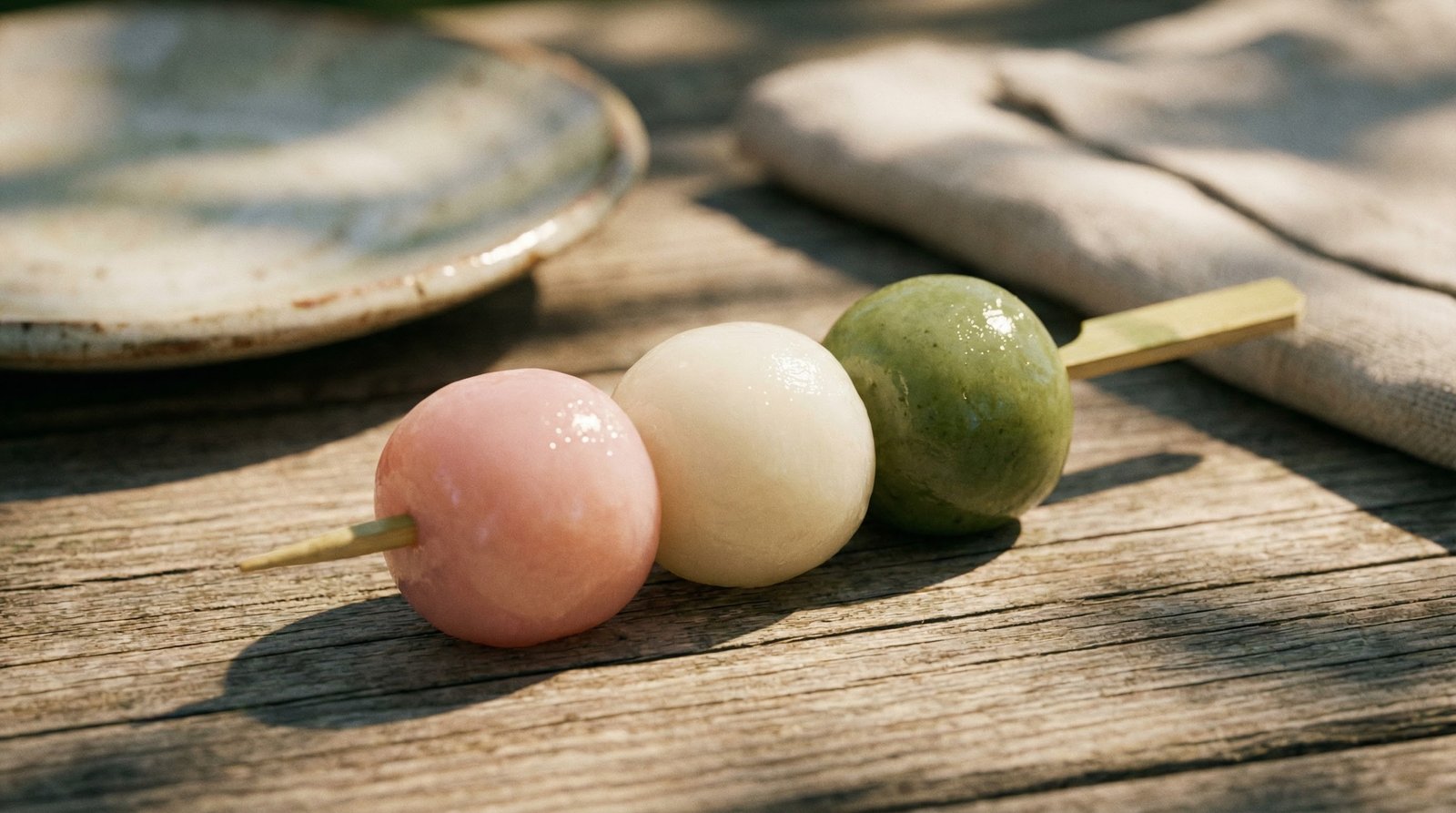
Sanshoku Dango Mochi
A staple of Japanese spring picnics, these sweet, chewy rice dumplings are instantly recognizable by their signature pink, white, and green colors. The vibrant hues represent the transition of seasons, from winter snow to cherry blossoms and spring grass. You'll only need a handful of pantry staples like glutinous rice flour, sugar, and matcha powder to recreate this traditional treat at home. They're lightly sweet, wonderfully chewy, and pair beautifully with a warm cup of green tea.
Equipment
- Stovetop
Ingredients
- 1¼ cups (150 g) glutinous rice flour
- ¼ cup plus 2 tablespoons (75 g) sugar
- 2 drops vegan red food coloring
- ¼ teaspoon matcha powder
Instructions
- 1Mix the glutinous rice flour and sugar together in a medium bowl, then divide the dry mixture equally into three separate bowls.
- 2Fill three small bowls with 3 tablespoons of water each. Stir the red food coloring into the first bowl and the matcha powder into the second bowl. Leave the third bowl with plain water.
- 3Pour the red water into one of the dry flour bowls and mix well. Repeat this process with the matcha water and the plain water for the remaining two bowls of flour. Add extra water, a half teaspoon at a time, if needed to help the dough come together without becoming sticky.
- 4Roll the pink, green, and white dough portions between your palms to create nine small, smooth balls of each color.
- 5Prepare an ice water bath in a large bowl. Bring a large pot of water to a boil over high heat. Drop in the white dough balls and cook for 1 to 2 minutes until they float to the surface.
- 6Scoop the cooked white dango out of the boiling water using a slotted spoon and plunge them directly into the ice bath. Chilling them quickly stops the cooking process and locks in that signature chewy texture.
- 7Boil and chill the pink dango next, followed by the green dango, using the exact same method.
- 8Remove the chilled dumplings from the ice water and thread one ball of each color onto nine individual skewers. Serve plain or brushed with sweet red bean paste.
Notes
- Serving: These are traditionally enjoyed plain, but you can brush them with sweet red bean paste (anko) for a richer flavor.
- Storage: Dango are best eaten the day they're made, as they will harden in the fridge. If you must store them, keep them in an airtight container at room temperature for up to one day.
- Tip: Boil the white dango first, followed by pink, then green. This prevents the darker colors from bleeding into the cooking water and staining the lighter mochi.